|
Welcome to my
Amateur Astronomy Page. My name is Paul and I'm a keen amateur astronomer
now living near Andover in Hampshire, UK,
about 70 miles west of London,
although many of my images were taken when I was living on the outskirts of
London.
| ||||||||||||||||||||||||||||||||||























 Click
here for latest pictures Click
here for latest pictures |
|

|
See my pictures of the Northern Lights |
 |
See the Andromeda Galaxy M31 |
 |
||
|
Astronomical Places of interest I have visited |
 |
My Observatory |
 |
 |
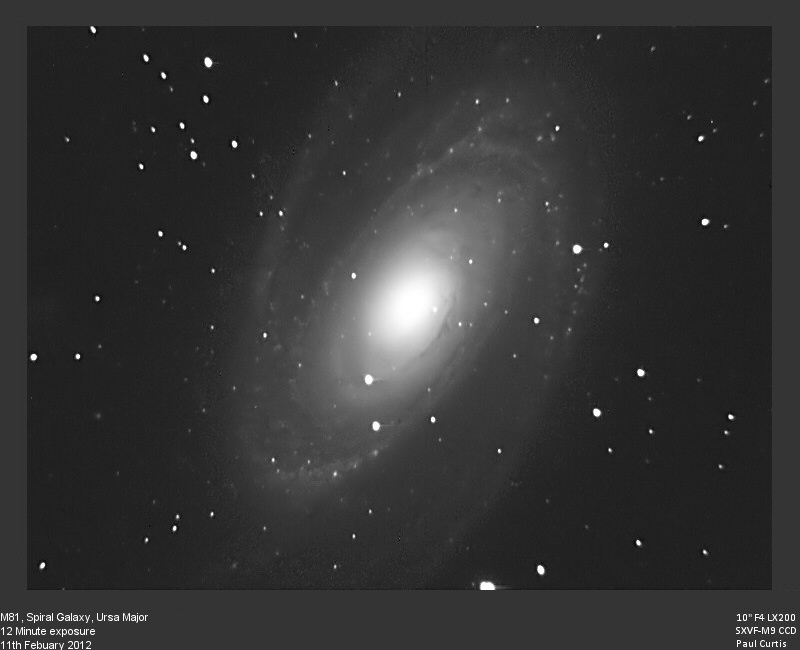
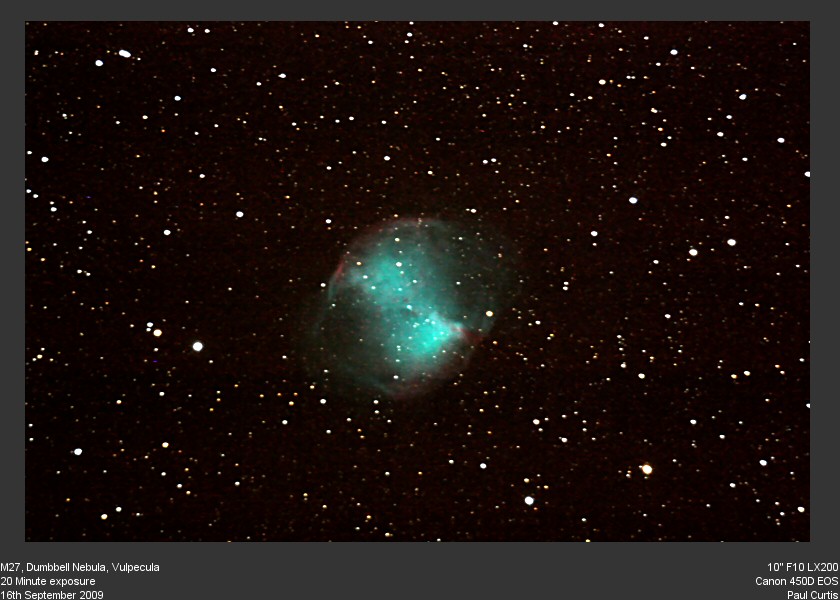
Many of the pictures were taken with Starlight Xpress cameras, initially an MX5 CCD, but now I use a Trius SX694 b&w camera with 6,050,000 x 4.54uM square pixels in a 15.98mm diagonal array and a Trius SX25C colour 6MP camera with a 23.4mm x 15.6mm sensor. I have also used DSLR land cameras, one modified for astronomical use, and showing they can produce excellent results for astrophotography. For imagng planets I have also used Webcams and video cameras. |
My main 'scope is currently a Meade 10" LX200. This is used either in basic f10 mode or with an f6.3 or f3.3 focal reducer for wider fields or a Barlow lens yielding f24 or f33 for some planetary shots. I don't use an auto-guider, but rely on the excellent tracking of the LX200 with the periodic error correction. Exposures with this setup are multiples of single 1 to 5 minute shots, the limit on these being dependent upon periodic error and also the f-ratio used, which can then be stacked up to give longer exposures. I also have a Meade LT8 for portable use. |
|

Some pictures were taken using DSLR cameras piggy-backed and guided by the main telescope. This gives a nice wide field of view, depending on the camera and lens used. With a digital SLR camera (Canon 550D or 1100D) and a 400mm lens the field of view is about 2.5 degrees. I have also been using Digital SLRs through my main scope, yielding nice colour images. The modified DSLR (1100D) I am using has the red cut-off filter removed and thus has much improved red sensitivity. The main limitation with DSLRs is that the sensors are not cooled and thus susceptible to noise in longer exposures. |

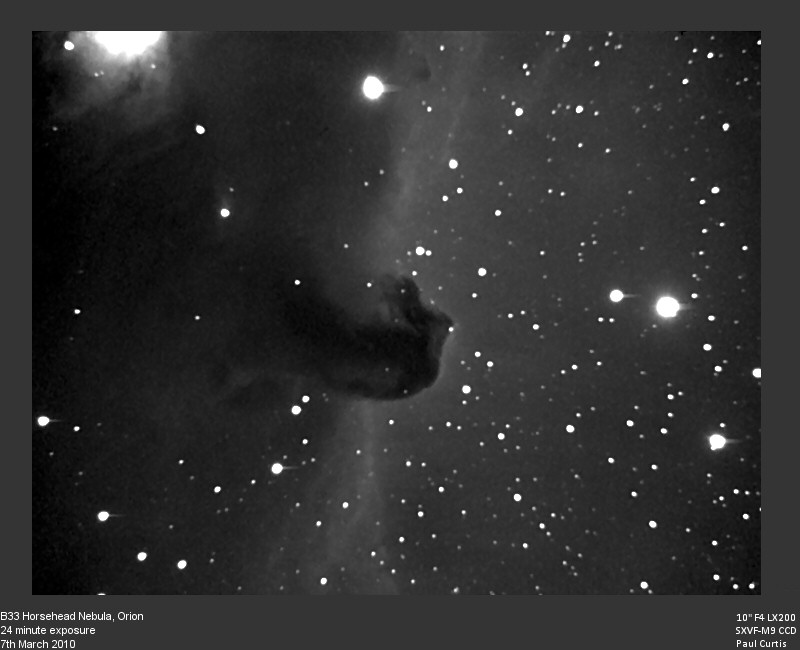
In 2010 I purchased an 80mm Meade APO refractor which I mainly use piggy backed on the LX200 for photography. This gives higher quality images than the DSLR camera lenses and a field of view of over 2 degrees. |
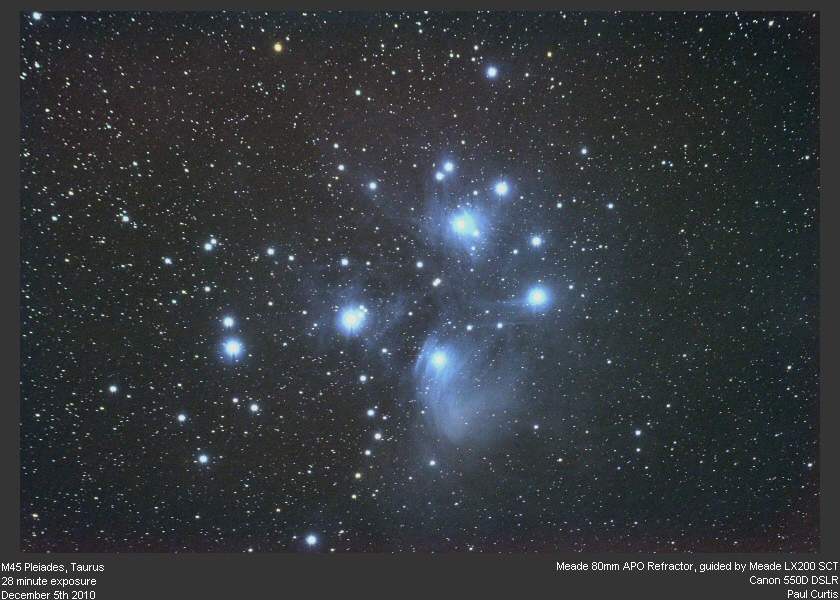
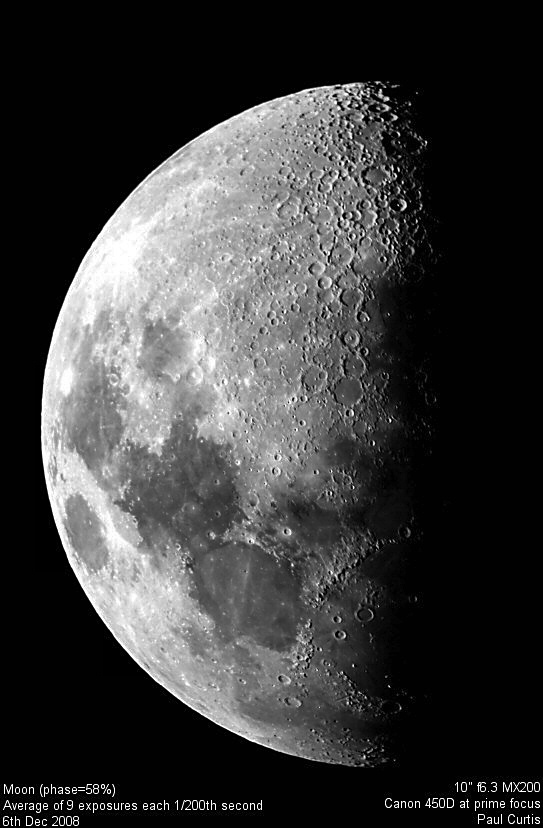
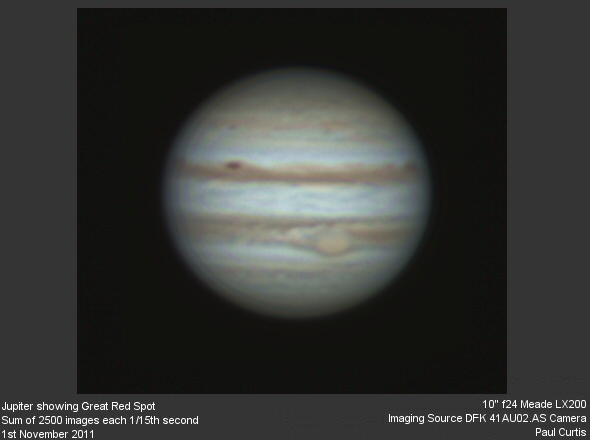
Lunar and planetary pictures are generally short exposures, typically <1 second. The lunar image to the right was taken with a DSLR through my Meade LX200 with an exposure of 1/200th second.Using a webcam or a video camera can yield impressive results - like the photo of Jupiter on the left ! I am currently using a high frame rate video camera from Imaging Source to image planets. Click here to see how it's done. |
 |
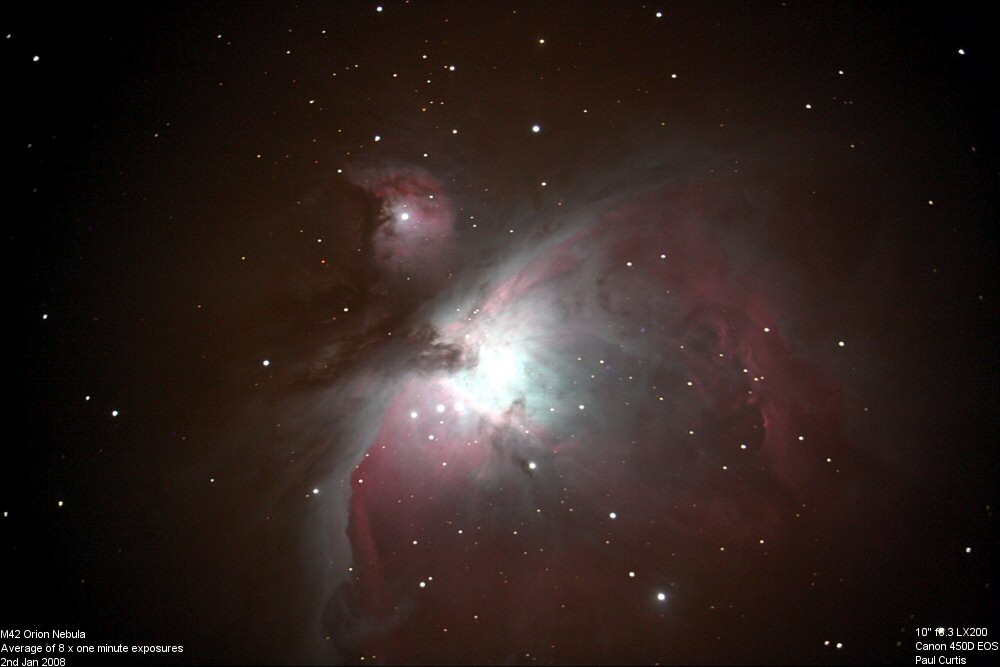
Although I have been an amateur astronomer for over 40 years, the photographs on this site were all taken since September 1997, since i converted from film to digital! In that time I have accumulated thousands of photographs - what is shown here are just examples !! |

In all my astronomy I make good use of the Skymap planetarium programme, which I would highly recommend. There is now an on-line version here. This allows me to find and centre objects on the CCD chip and control the scope from the computer. SkyMap Pro includes the GSC and thus stars down to mag 16+ are included, which is a great help with CCD imaging. For image processing I have also been using Astroart, which is an excellent piece of software. |

I hope you enjoy the photos !!
Paul
Let me know what you
think of my site
 E
mail me
E
mail me
If your buttons on the left side of the page are not working you need to download the free java plug-in here

latest comets lunar planets nebulae spiral galaxies supernovas stars planetary nebulae open clusters elliptical galaxies edge-on galaxies dark nebulae globular clusters messier objects other objects
Visit my local astronomy clubs here: -
Andover Astronomy Society
Cody Astronomy Society
Try the great BBC Science and Technology
web site here

This page was last updated on
29-Sep-2020.
We're listed on Yahoo's Science and Astronomy Pages
This site does not use cookies.
You Are Visitor Number


'
'